Singapore’s industrial landscape relies heavily on rapid logistics and precision warehousing infrastructure. Across industrial clusters like Jurong Innovation District, Changi Logistics Zone, and Tuas, warehouse managers face constant pressure to optimize storage density and accelerate throughput. At the center of these daily material handling frameworks sits the humble forklift. While selecting a material handling unit seems simple initially, selecting the specific fuel and power configuration requires an intricate balance of economics, environmental safety compliance, and long-term operating practicalities.
Choosing between electric, diesel, and liquefied petroleum gas (LPG) forklifts is not merely a question of baseline purchasing or leasing costs. For standard Singaporean enterprises working alongside established industry experts like Nam Seng Cargo Services, this decision directly influences indoor air quality indices, complex workspace acoustics, spatial requirements for maintenance bays, and regulatory alignment with national green initiatives. This comprehensive guide evaluates each core forklift technology, highlighting structural trade-offs to help logistics decision-makers select the ideal machinery configuration for their warehouse layout.
The Electric Forklift: Precision Engineering for Indoor Operations
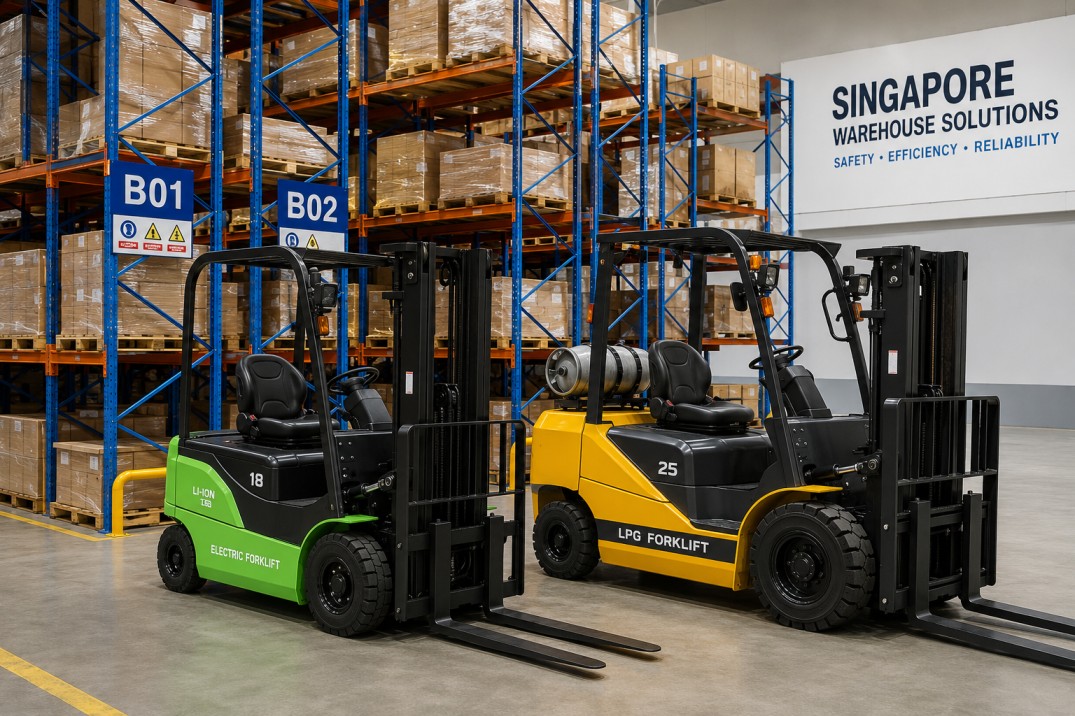
Electric forklifts have transitioned from specialized niche tools into mainstream warehouse equipment across Singapore’s industrial sectors. Powered by large, integrated industrial batteries, these machines operate with zero tailpipe emissions, making them the standard choice for indoor food-grade logistics, pharmaceutical storage, and tightly sealed air-conditioned fulfillment facilities.
Key Advantages of Electric Configurations
The operational dynamics of electric setups offer massive structural benefits for indoor operations. Because they lack internal combustion engines, they operate almost silently, dramatically lowering ambient noise stress in compact loading facilities.
Minimal Maintenance Overhead
Their mechanical architecture eliminates traditional gearboxes and complex exhaust systems, which directly results in fewer moving components, lower friction wear, and reduced routine maintenance interventions.
Enhanced Stability and Maneuverability
Furthermore, their heavy battery packs are positioned low in the chassis, acting as an integrated counterweight that offers superior stability and compact turn radii within narrow aisle pallet systems.
Structural Limitations and Infrastructure Demands
However, moving to a fully electric material handling layout involves unique infrastructure changes. While charging electricity costs less than purchasing industrial liquid fuels, the initial capital expenditure for heavy-duty lithium-ion or lead-acid setups remains relatively high.
Dedicated Charging Stations
Warehouses must dedicate precise real estate to specialized, ventilated charging bays that comply with local structural fire safety standards.
Battery Management Constraints
Additionally, if a facility relies on traditional lead-acid batteries, operations must account for lengthy battery cooling cycles, which can slow down continuous multi-shift distribution cycles unless spare battery inventory is kept on hand.
The Diesel Forklift: Uncompromising Power for Heavy Industrial Spaces
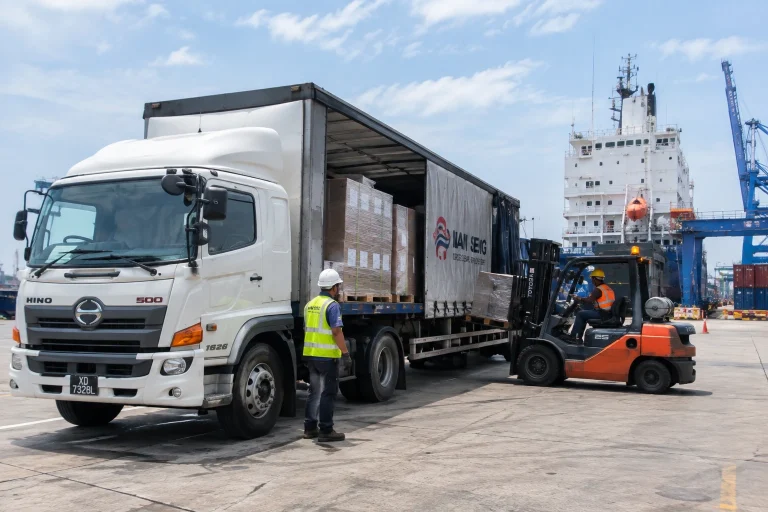
On the opposite end of the engineering spectrum lies the diesel-powered forklift, a machine designed explicitly for raw torque, outdoor resilience, and high-capacity industrial lifting. Utilizing heavy internal combustion engines, diesel units are the primary choice for outdoor container storage areas, shipyard integration zones, and open-air construction supply yards throughout Singapore.
Core Operational Strengths
The defining advantage of diesel material handling units centers around their endless operational endurance. Unlike electric models that require hours of grid connection to recharge, a diesel forklift can be refueled to maximum capacity in minutes, ensuring continuous runtime across grueling multi-shift work cycles.
Superior Torque Performance
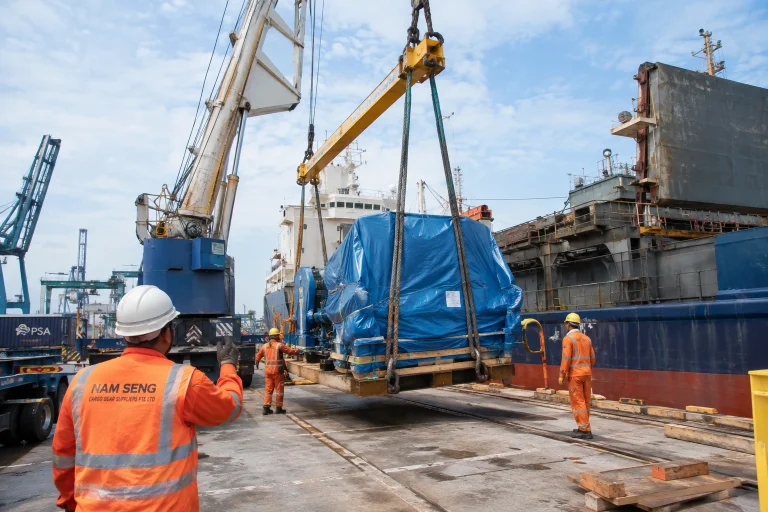
Their mechanical drivetrains generate massive torque, allowing them to handle heavy breakbulk shipments, un-containerized steel loads, and complex industrial rigging equipment over rough, unpaved surfaces without overheating.
Weather and Climate Resilience
Additionally, their structural components resist harsh tropical elements, heavy downpours, and high humidity far better than sensitive electronic components.
Environmental and Layout Constraints
The obvious limitation of diesel material handling units is their complete restriction from indoor environments.
Air Quality Violations
The exhaust profile of a diesel engine contains heavy particulate matter, carbon monoxide, and nitrous oxides, making indoor operation a severe health and regulatory violation under local workplace safety frameworks.
Noise Pollution and Engine Wear
They also create significant noise and vibration profiles, requiring open-air environments to disperse sound waves safely. From an economic perspective, maintaining complex diesel engines requires regular oil filter changes, fuel system cleanings, and mechanical tune-ups, which increases long-term maintenance costs.
The LPG Forklift: The Hybrid Compromise for Flexible Fleet Demands
For supply chains that require a single material handling vehicle to transition seamlessly between indoor staging zones and outdoor delivery docks, liquefied petroleum gas (LPG) forklifts offer a versatile middle ground. Powered by pressurized gas cylinders mounted securely to the rear chassis, these units combine internal combustion power with cleaner exhaust metrics.
Advantages of Multi-Zone Deployment
LPG forklifts provide flexible performance profiles that closely mirror the power dynamics of diesel machinery. They maintain consistent acceleration and lift capacity throughout the entire shift, suffering no performance drops as the fuel cylinder empties.
Rapid Refueling Adaptability
When a gas cylinder is depleted, operators simply swap the empty tank for a fresh one in under three minutes, allowing operations to resume immediately.
Clean Combustion Benefits
Because LPG burns much cleaner than diesel, these forklifts can safely handle indoor operations within large, well-ventilated warehouse zones, while still retaining the power to drive up steep outdoor loading ramps in heavy rain.
Operational Risk and Safety Management
Despite this operational flexibility, managing an LPG forklift fleet introduces unique safety procedures.
SCDF Fire Safety Compliance
Storing pressurized liquid petroleum gas cylinders on-site requires strict adherence to Singapore Civil Defence Force (SCDF) fire safety codes and dedicated, secure outdoor storage cages.
Volatile Fuel Economics
The ongoing cost of fuel cylinder deliveries can also become volatile depending on global energy market shifts. Furthermore, the mechanical layout still features complex internal combustion components, meaning your engineering teams must balance regular engine maintenance alongside safety checks for gas lines, pressure regulators, and fuel valves.
FAQs
Which forklift type is legally required for food and pharmaceutical warehouses in Singapore?
Electric forklifts are generally mandatory for these sectors because their zero-emission design prevents chemical or particulate contamination of sensitive inventory.
Can LPG forklifts be safely operated inside small, enclosed fulfillment hubs?
No, LPG units should only work indoors within large, well-ventilated spaces; tightly sealed or air-conditioned hubs require electric units to prevent gas buildup.
How do Singapore’s green sustainability initiatives affect forklift selection?
National sustainability targets push businesses toward electric fleets by offering green productivity grants and imposing stricter emissions checks on combustion engines.
What is the typical charging time required for an industrial electric forklift?
Standard lead-acid batteries require roughly 8 hours to charge and 8 hours to cool, whereas modern lithium-ion setups support fast “opportunity charging” during short worker breaks.
Why do outdoor container yards prefer diesel units over electric alternatives?
Diesel units handle rough terrain, withstand heavy tropical downpours, and offer the massive torque needed for heavy continuous lifting without battery drop-off.
Conclusion
Selecting the right forklift setup comes down to your primary operating environment, required lifting capacities, and daily shift schedules. Electric units offer quiet, emission-free performance for indoor spaces, diesel models deliver rugged power for heavy outdoor yards, and LPG configurations provide a flexible compromise for mixed indoor-outdoor setups. Assessing these parameters carefully helps your business optimize material handling efficiency while remaining fully compliant with local industrial safety standards. Balancing your internal warehouse equipment is just one part of a great supply chain strategy. Contact us today to build a highly efficient, budget-conscious transport configuration for your business operations in Singapore.