Singapore’s fast-paced urban development and industrial expansion require precise mechanical lifting solutions. Whether you are managing infrastructure setups in Tuas, delivering heavy industrial manufacturing components to Jurong, or lifting structural glass panels onto a commercial high-rise in the Downtown Core, moving oversized loads demands highly specialized machinery. For site managers, procurement officers, and logistics planners across the city-state, coordinating these heavy maneuvers usually brings up a common logistical question: should you hire a standard Lorry Crane or contract a specialized Hiab vehicle for your commercial layout?
Making the wrong choice can lead to severe operational inefficiencies, tight site access bottlenecks, unexpected rental extensions, and potential workplace safety violations under Ministry of Manpower (MOM) frameworks. While people in the construction and freight forwarding industries often use these terms interchangeably, understanding the technical differences between general lorry cranes and specialized Hiab machinery is critical. This comprehensive industrial guide analyzes the structural designs, lifting dynamics, and ideal use cases for both configurations to help you select the perfect equipment for your operational needs.
Understanding Lorry Crane Services in Singapore
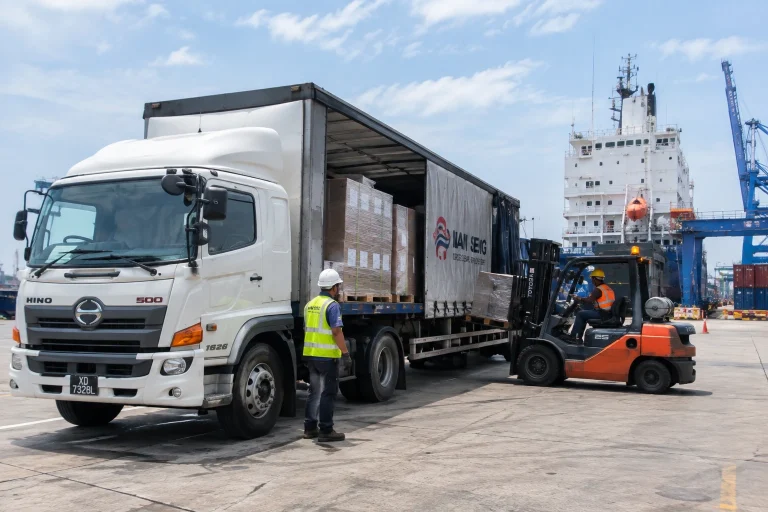
A lorry crane refers to a broad classification of commercial transport vehicles featuring an integrated hydraulic crane mounted directly onto a heavy-duty truck chassis. This dual-purpose engineering allows a single vehicle to lift heavy assets, place them securely onto its flatbed cargo deck, transport those goods via public expressways, and unload them at the destination without requiring a separate mobile crane. These vehicles are widely used in construction, logistics, and industrial lifting operations where efficiency and versatility are essential. Our lorry truck rental services include a range of heavy-duty transport solutions tailored to different project requirements.
High Capacity Industrial Utility
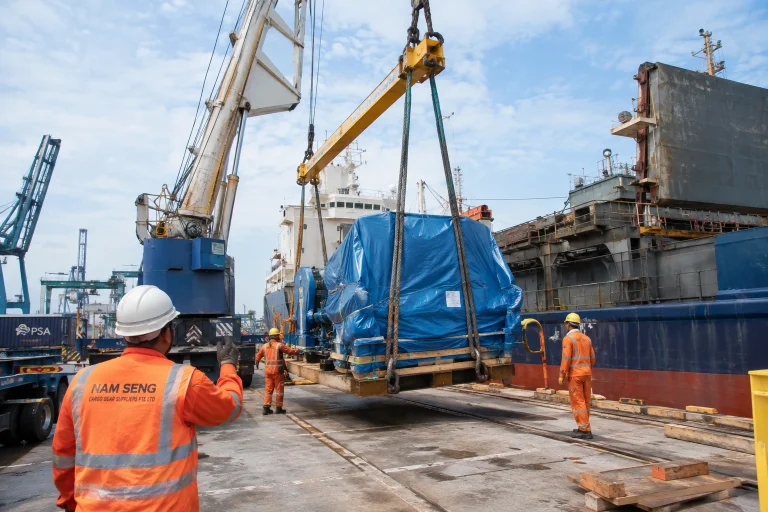
For standard Singaporean enterprises working alongside established industry experts like Nam Seng Cargo Services, these machines provide the foundational strength required for large-scale industrial distribution. The rigid engineering behind traditional lorry cranes makes them the primary choice for moving heavy construction materials, large switchgears, and massive civil engineering components across open industrial grounds.
What is a Hiab Truck?
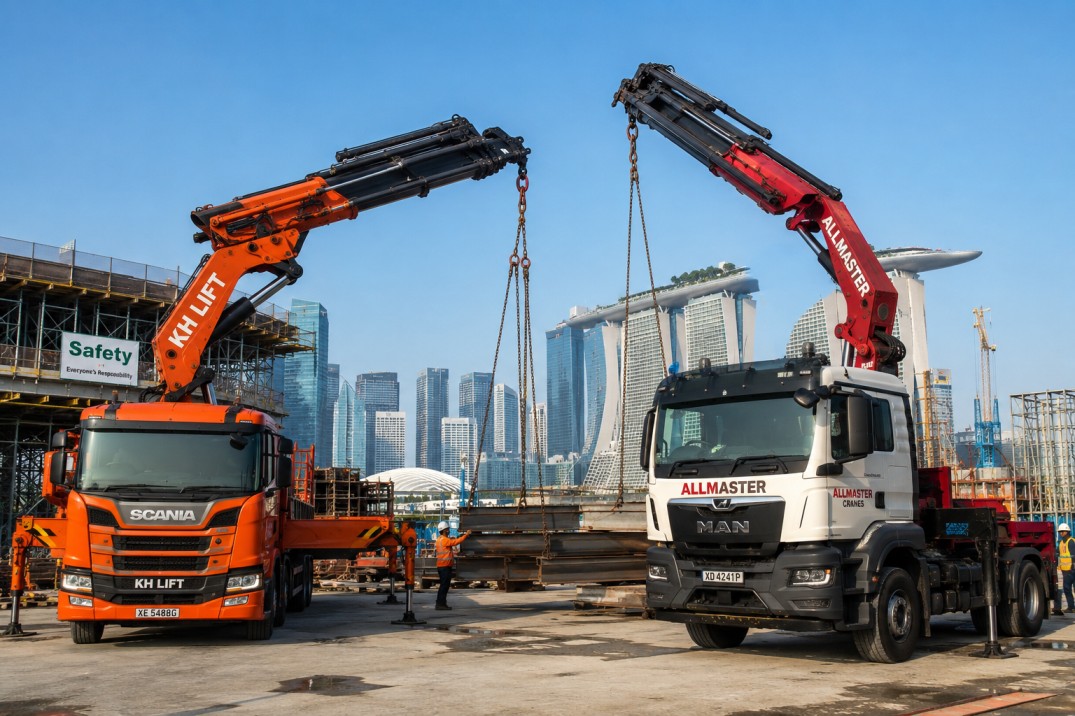
A Hiab truck is not a distinct mechanical category but rather a premium brand name manufactured by the Finnish corporation Cargotec that became the industry standard term for knuckle-boom cranes. When logistics managers in Singapore request a Hiab hire, they are specifically asking for an articulated crane system that folds down compactly behind the driver’s cab like a human finger knuckle. This design differs significantly from traditional stiff-boom or straight-crane configurations that remain extended over the length of the vehicle’s cargo bed.
Precision Control in Urban Sectors
The engineering focus of a Hiab loader crane centers on spatial flexibility, rapid setup speeds, and precise handling. Because the articulated boom can bend and telescope at unique angles, these trucks can operate efficiently inside congested urban loading bays, under low-clearance bridges, and within restricted alleyways where a traditional straight-boom truck cannot physically extend its lifting arm.
Lorry Crane vs Hiab: Key Differences in Engineering and Application
Understanding the structural differences between traditional straight-boom lorry cranes and articulated Hiab trucks helps prevent operational failures on complex job sites.
Boom Geometry and Headroom Clearances
The defining engineering difference lies in the boom geometry. Traditional lorry cranes utilize a rigid, straight telescopic boom raised by a heavy hydraulic winch-and-cable system. This layout requires considerable overhead clearance to lift objects over obstacles, making it purely suited for open-air environments. Conversely, a Hiab’s knuckle-boom folds at mid-section joints, allowing it to navigate under tight ceilings or low indoor clearances while retaining its lifting geometry.
Winch Lifting vs Hydraulic Hook Articulation
Straight-boom cranes use a traditional winch line to lower hooks vertically into deep trenches, foundation pits, or onto high building floors with exceptional stability. A Hiab crane typically grips the load closer to the boom tip via hydraulic extensions, offering incredible horizontal reach and agility around physical building columns, though it lacks the deep vertical winching depth of its stiff-boom counterpart.
When Should You Hire a Lorry Crane?
A heavy-duty straight-boom lorry crane is the ideal choice when your project deals with massive, unyielding weights that require absolute linear stability. Projects involving large steel structure fabrications, heavy concrete slabs, or oversized industrial generator sets demand the raw structural counterweight and winch capabilities of a large lorry crane.
High-Vertical Open Air Placement
When you need to drop heavy components over a long distance into an open excavation site or lift equipment straight up to an elevated building platform, the straight telescopic boom provides safe, vertical control. It minimizes load-swinging variables under standard wind conditions, keeping your operations fully aligned with local safety protocols.
When Should You Hire a Hiab Truck?
An articulated Hiab crane is highly recommended when your delivery site features tight spatial restrictions or low headroom barriers. If you need to position heavy electrical control panels or commercial air handling units inside a covered industrial facility, a Hiab can slip under the roof line and place the cargo precisely where it needs to go.
Fast Urban Logistics and Drop-and-Go Deliveries
For multi-stop commercial deliveries across downtown Singapore where street space is limited, Hiab trucks offer rapid hydraulic deployment. Their compact footprints allow them to set up their outriggers quickly, discharge medium-weight pallets or commercial machinery over a boundary wall or fencing structure, and clear the public roadway without causing traffic bottlenecks.
Operational Safety and Ministry of Manpower Compliance
Operating heavy lifting machinery anywhere in Singapore requires strict adherence to workplace safety regulations enforced by the Ministry of Manpower. Every lorry crane or Hiab deployed on a commercial site must possess an active, valid Lifting Machine (LM) certificate issued by an MOM-authorized inspector. Utilizing uncertified machinery can lead to immediate stop-work orders and severe corporate fines.
Certified Site Personnel Requirements
The driver operating the truck-mounted crane must hold a valid, MOM-accredited lorry crane operator licence appropriate for the vehicle’s weight class. For complex or high-risk maneuvers, the operator cannot work alone; they must coordinate with a certified lifting team, including a lifting supervisor, rigger, and signalman, to ensure full compliance with the Workplace Safety and Health (WSH) Approved Code of Practice.
FAQs
Is a Hiab crane different from a standard lorry crane?
A Hiab is a premium brand of articulated knuckle-boom crane that folds down compactly, whereas “lorry crane” is a general term that includes both straight-boom and articulated truck-mounted cranes.
Which crane setup is better for lifting cargo inside a covered warehouse?
An articulated knuckle-boom crane is much better for indoor use because its flexible joints allow it to lift and place loads in tight spaces with low headroom.
Can a lorry crane legally transport cargo on Singapore public roads while loaded?
Yes, lorry cranes are dual-purpose vehicles engineered to lift assets onto their own flatbed decks and legally transport them across expressways, maximizing transport efficiency.
What certification is required to operate a lorry crane in Singapore?
Operators must hold a valid Class 4 or Class 5 driving licence along with an MOM-recognized Lorry Crane Operator certificate to legally run the lifting machinery.
How does wind and weather affect straight-boom vs. articulated crane lifts?
Straight-boom cranes using winch cables are more prone to load-swinging in high winds, while articulated cranes hold the load closer to the boom tip, offering better control in tight spots.
Conclusion
Choosing between a standard straight-boom lorry crane and an articulated knuckle-boom system comes down to your project’s physical space, headroom limitations, and specific lifting angles. Stiff-boom cranes offer excellent reach and vertical stability for open-air construction setups, while articulated units provide unparalleled flexibility for indoor rigging and congested urban worksites. Selecting the right equipment configuration optimizes site safety and keeps your project running efficiently within local regulatory guidelines. Coordinating specialized heavy lifts requires reliable machinery and experienced, certified personnel. Contact us today to build a highly efficient, budget-conscious transport configuration for your business operations in Singapore: