Managing commercial transport logistics in a highly regulated hub like Singapore requires strict compliance with licensing rules, especially when expanding from warehousing into full fleet operations. One of the most important requirements for businesses is understanding the difference between a Class 3 vs Class 4 driving licence, as it directly determines who is legally allowed to operate different types of commercial vehicles. Many operators mistakenly assume that a standard car licence is sufficient for light or medium lorries, but Singapore’s Land Transport Authority (LTA) and Traffic Police enforce clear rules based on vehicle weight and classification. Using the wrong licence can lead to serious consequences, including insurance invalidation under the Road Traffic Act, financial penalties, and operational risks. Properly distinguishing between a Class 3 vs Class 4 driving licence ensures legal compliance, safer fleet management, and uninterrupted logistics operations.
Decoupling the Legal Frameworks: The Base Classifications
To establish an optimized fleet operational structure, fleet operators must first understand the strict statutory dividing lines that separate these two commercial vehicle driver qualifications.
Statutory Boundaries of the Class 3 System
The Class 3 qualification is the most widely held commercial vehicle driver credential across local business sectors. According to statutory definitions, a Class 3 credential permits an operator to drive light motor vehicles, including cars and light goods vehicles, provided the unladen weight does not exceed 2,500 kilograms.
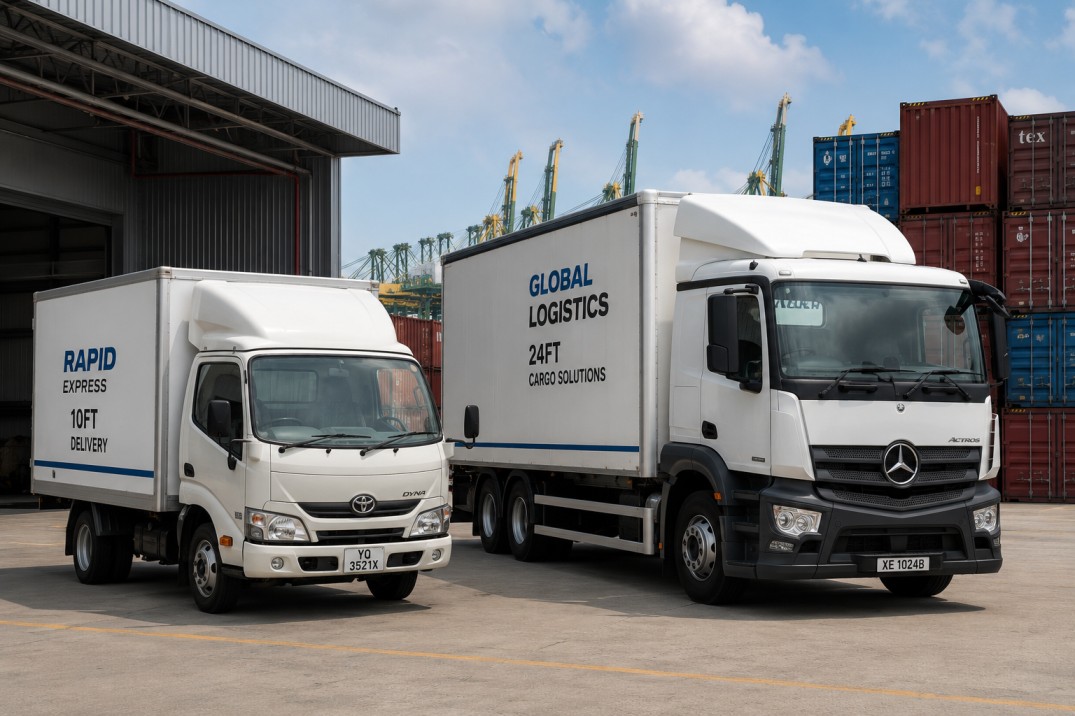
This framework effectively covers the vast majority of urban delivery workhorses, including panel vans and light 10-foot Japanese cab-over lorries. When comparing a Class 3 vs Class 4 driving licence, the key metric is always the empty weight of the chassis before any cargo is added.
Structural Mandates of the Class 4 Architecture
Conversely, a Class 4 qualification is explicitly required for operating heavier commercial vehicles whose unladen weight exceeds 2,500 kilograms. These include large 14-foot enclosed box trucks, 24-foot curtain-side cargo haulers, and heavy industrial tipper units. The transition to this heavy vehicle tier requires more advanced driving skills due to larger blind spots and complex pneumatic air brake systems. This is why when businesses utilize professional Lorry & Truck Rental Services, the structural dividing line for a Class 3 vs Class 4 driving licence is heavily monitored by industrial safety compliance officers to ensure every deployed driver is legally qualified for that specific vehicle tonnage.
Comparative Matrix: Fleet Specifications & Weight Limits
The following structural matrix breaks down the legal differences between a Class 3 vs Class 4 driving licence based on current Traffic Police and LTA guidelines:
| Regulatory Parameter | Class 3 / 3A Licence Tier | Class 4 Licence Tier |
| Unladen Weight Limit | Must not exceed 2,500 kg | Exceeds 2,500 kg |
| Typical Lorry Types | 10ft Open/Box Lorries, Light Vans | 14ft, 18ft, 24ft Box & Crane Trucks |
| Brake System Design | Standard Hydraulic Systems | Heavy Pneumatic / Air Brake Systems |
| Minimum Driving Age | 18 Years Old | 21 Years Old |
| Medical Verification | Standard check-ups at elder ages | Annual check-ups and proficiency runs |
| Speed Limiter Rules | Required if MLW exceeds 3,500 kg | Mandatory for heavy configurations |
How Vehicle Modifications Can Suddenly Shift License Requirements
A major operational trap for local fleet managers is realizing that aftermarket vehicle upgrades can unexpectedly change the license classification required for their drivers.
The Hidden Weight of Functional Add-Ons
When analyzing a Class 3 vs Class 4 driving licence, remember that the unladen weight includes the vehicle’s full structural body and all permanently attached equipment. A standard 10-foot or 14-foot aluminum flatbed vehicle might sit safely below the 2,500 kg threshold when rolling off the factory line. However, adding a heavy-duty hydraulic tail lift or steel canopy protection systems can easily push the vehicle’s empty weight over the limit.
Chiller Unit Upgrades and Structural Weights
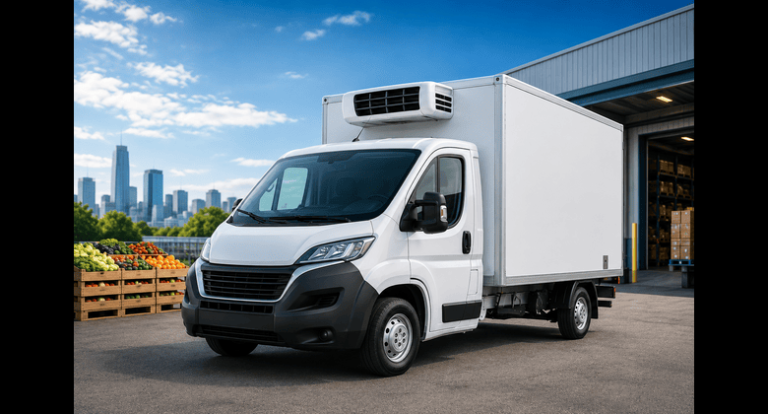
This hidden weight issue is very common when converting standard dry cargo trucks into insulated reefers for cold chain distribution networks. Thick polyurethane interior panels, heavy rear door seals, and roof-mounted transport refrigeration compressors add considerable unladen weight.
As a result, an upgraded vehicle can cross the 2,500 kg line, turning a truck that previously required a standard commercial permit into a heavy vehicle that legally demands a Class 3 vs Class 4 driving licence qualification from your drivers.
Foreign Work Pass Conversions and Legal Operational Risks
For many logistics firms in Singapore, foreign workers make up a significant portion of the driver pool, making foreign license conversion policies a critical compliance area.
The Structural Limits of Class 3C Conversions
Work Permit and S-Pass holders who convert their native driving permits are typically granted a Class 3C or Class 3CA licence after passing the localized Basic Theory Test (BTT). This basic conversion allows them to drive private consumer vehicles but completely prohibits them from operating commercial goods vehicles for work purposes.
To legally drive even a light 10-foot delivery lorry, foreign workers must take an additional Practical Driving Test to upgrade their status to a full Class 3 credential. This process highlights why tracking the limits of a Class 3 vs Class 4 driving licence is essential for compliance managers.
Strict Training Routes for Heavy-Duty Class 4 Upgrades
A foreign worker cannot directly convert an overseas license into a heavy vehicle qualification. To legally drive a rented 14-foot or 24-foot truck, the operator must first hold a valid, localized Class 3 qualified license.
Only after securing this baseline can they enroll in certified driving centers to complete the practical training and rigorous circuit tests required for a full Class 4 license. Skipping these steps can lead to severe penalties for your business from the Ministry of Manpower.
Strategic Internal Service Link Integration
Selecting the perfect vehicle size and managing driver licensing requirements is crucial for a compliant commercial supply chain. If your current workforce only holds standard light-vehicle credentials, hiring a heavy commercial truck can present immediate operational bottlenecks. Utilizing professional Lorry Crane and Transportation Services eliminates these compliance risks completely. Partnering with a reliable third-party provider gives your business instant access to fully certified heavy vehicles and experienced, legally compliant operators, protecting your logistics from unexpected regulatory issues.
FAQs
Can a driver with a standard Class 3A licence legally drive a commercial box lorry?
Yes, a driver holding a Class 3A licence can operate a commercial vehicle, provided the lorry uses an automatic transmission and its unladen weight stays under 2,500 kg.
What is the main structural dividing line between a Class 3 vs Class 4 driving licence?
The primary legal boundary is an unladen weight of 2,500 kilograms; anything lighter falls under Class 3, while anything heavier requires a Class 4 license.
Do automatic-only variants exist for the heavy vehicle Class 4 licence tier?
Yes, the Traffic Police recognize a Class 4P licence variant, which restricts the holder to operating heavy commercial vehicles equipped with automatic transmissions.
What happens if an operator drives a 14-foot truck without the proper license?
Driving without the correct class category means the vehicle is completely uninsured, exposing the driver to immediate arrest and the company to massive statutory fines.
How often must a heavy vehicle Class 4 licence be renewed in Singapore?
Unlike standard consumer permits, a Class 4 credential requires annual renewal up to age 75, along with passing mandatory medical checks and proficiency road tests.
Conclusion
Understanding the rules governing a Class 3 vs Class 4 driving licence is essential for maintaining an efficient, legally compliant logistics operation in Singapore. The 2,500 kg unladen weight boundary separates nimble urban light delivery vans from large, heavy-duty industrial transport trucks. By checking your vehicle’s log card details after modifications and ensuring your driving team has the correct certifications, your business can avoid costly legal issues and keep your supply chain running smoothly. Managing commercial vehicle compliance can be challenging for a growing business. Contact us today to secure fully compliant, professional transport solutions tailored to your business goals across Singapore: