Not every shipment fits neatly into a standard container. Some cargo is too large. Some is irregularly shaped. Some must be handled as individual pieces rather than packed into a box. For these jobs, a specialist approach is needed, one built on experience, trained crews, and the right equipment for the task.
Singapore moves millions of tonnes of general cargo every year. Jurong Port is the country’s main gateway for non-containerized cargo, handling steel products, cement, project equipment, and industrial goods daily. Getting this cargo safely on and off vessels requires precise planning, skilled stevedores, and proven ground handling support.
Nam Seng Cargo has been delivering stevedoring and port logistics across Singapore’s terminals since 1988. This guide covers what conventional cargo handling involves, which loads it covers, and how the process works from quayside to vessel.
What Is Conventional Cargo Handling Singapore?
Conventional cargo handling Singapore refers to the loading, discharging, and movement of cargo that is not containerized. Instead of being packed into standard 20ft or 40ft TEU containers, goods are handled as individual units, loose pieces, or large single items.
This method is also known as general cargo handling or break bulk handling. It covers a wide range of goods, from steel beams and timber to industrial machinery, project equipment, and oversized vehicles. Each piece is lifted, positioned, and secured separately, which requires skilled stevedores and properly rated lifting equipment.
Conventional cargo handling Singapore is distinct from bulk cargo handling, where loose materials like grain or coal are poured or pumped into a vessel’s hold. Break bulk and conventional cargo are always handled as countable, identifiable units, which makes documentation, weight management, and stowage planning more detailed and precise.
What Types of Cargo Fall Under Conventional Cargo Handling Singapore?
The range of goods that require conventional handling is broader than most people expect. Construction, energy, manufacturing, and maritime industries all regularly move cargo this way.
Break Bulk Cargo
These are goods loaded piece by piece, bags, drums, crates, coils, and bundles. Steel coils, bagged cement, and timber are common examples. Each unit is handled individually and stowed carefully in the vessel’s hold to maximise space and prevent damage during transit.
Oversized and Out-of-Gauge Loads
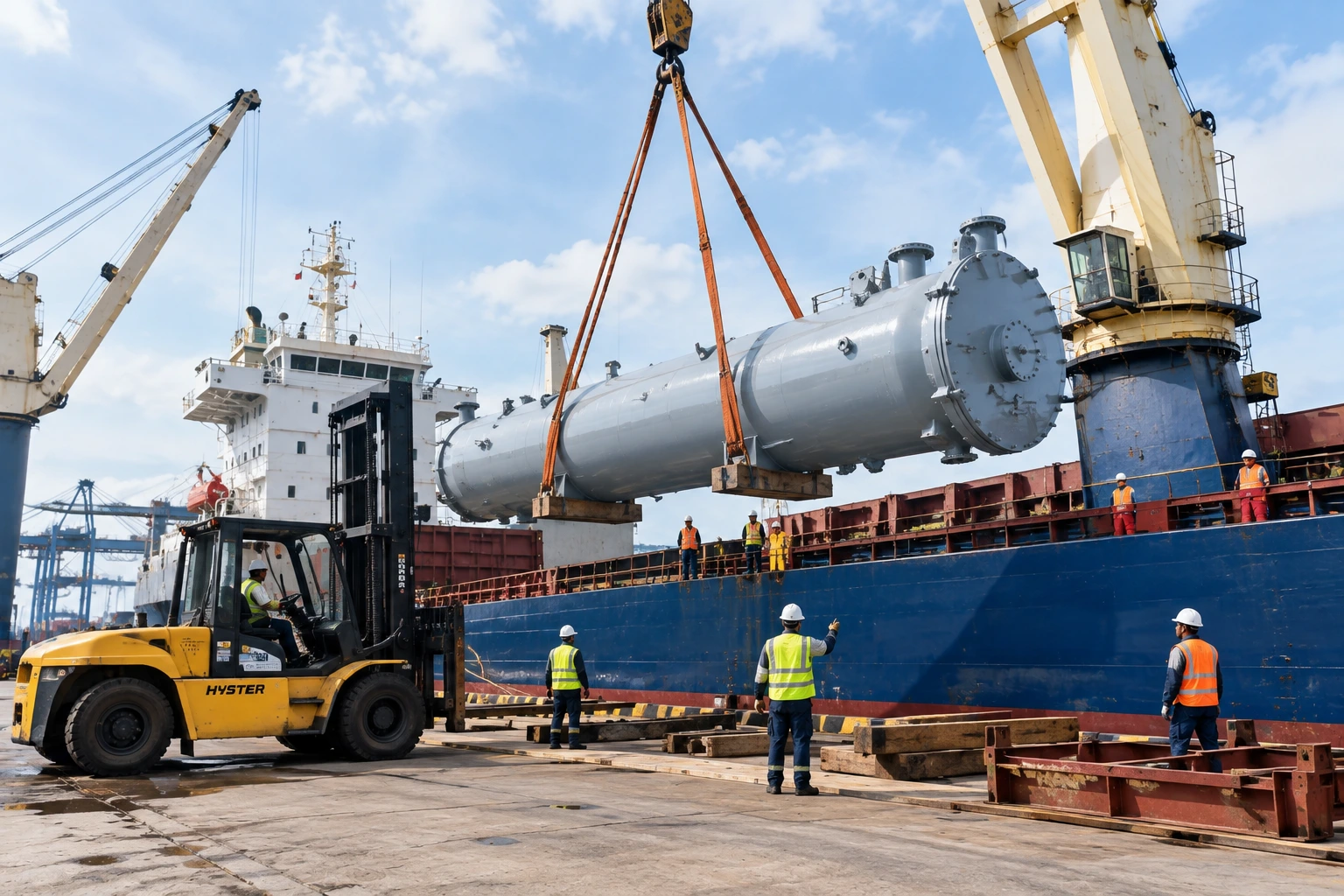
Some cargo simply cannot be containerized because of its dimensions. Industrial boilers, turbine blades, pressure vessels, large generators, and fabricated steel structures all fall into this category. Oversized loads require a lift plan, engineered stowage, and experienced riggers on site. Jobs like these are supported by Nam Seng Cargo’s forklift and lifting equipment rental available alongside the stevedoring team for quayside operations.
Project Cargo
Large-scale infrastructure and energy projects often involve single, high-value pieces of equipment that must arrive undamaged and on schedule. Transformers, reactor vessels, offshore modules, and crane components are typical examples. Project cargo requires careful pre-planning and close coordination with the vessel operator and port authority.
Heavy Lift Cargo
Some cargo exceeds the capacity of standard shore cranes and requires specialist heavy lift vessels or floating cranes. Heavy lift operations demand certified riggers, detailed weight and centre-of-gravity calculations, and strict WSH compliance at all times.
Ro-Ro and Wheeled Cargo
Vehicles, construction equipment, and wheeled machinery are often moved by roll-on/roll-off method, driven or towed directly onto the vessel via a ramp. This avoids lifting entirely and is used for cargo that is self-propelled or easily towed.
Why Conventional Cargo Handling Requires a Specialist Provider
Containerized cargo is handled at high volume with standardized processes. Conventional cargo is different every time. The load shape changes. The weight distribution varies. The stowage plan must be calculated fresh for each job.
This is why conventional cargo handling Singapore cannot be managed by a general logistics company without specific port and stevedoring experience. The risks are significant: a poorly secured load shifts at sea, causing vessel instability or cargo damage. An incorrect lift plan leads to equipment failure on the quay. Missing documentation delays clearance at the destination port.
Experienced stevedoring teams avoid these problems before they start. They arrive with the right equipment, a confirmed lift plan, and full knowledge of the berth and vessel type. The job is executed safely, documented correctly, and handed over to the vessel master on time.
Key Equipment Used in Conventional Cargo Handling
The tools deployed on a conventional cargo job depend on the cargo type and berth being used. Common equipment includes:
- Mobile harbour cranes: for lifting heavy individual pieces onto or off the vessel
- Forklifts and reach stackers: for moving cargo across the quayside before lifting
- Spreader bars and custom lifting frames: for out-of-gauge or irregularly shaped loads
- Chain lashings and securing equipment: for fastening cargo inside the hold after loading
- Flatbed trailers and low loaders: for transporting oversized cargo from storage to the berth
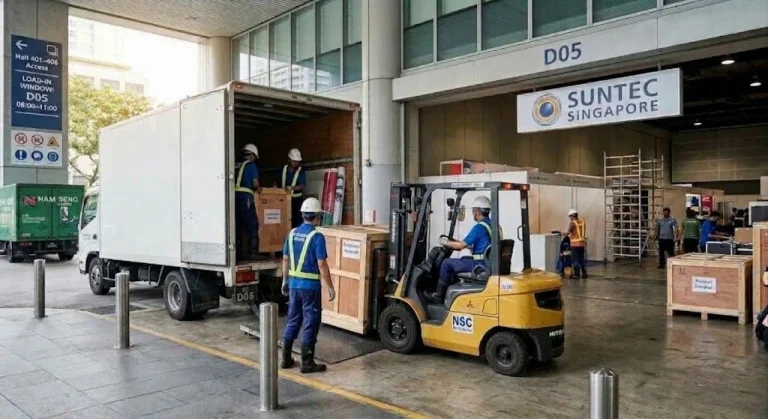
Once cargo is discharged from a vessel, it often needs to move directly to a warehouse or site. Nam Seng Cargo’s lorry and truck rental covers that next leg, so the port operation and inland transport are handled by the same provider.
The Conventional Cargo Handling Process at Singapore Ports
A well-run conventional cargo job follows a clear sequence. Each stage is as important as the one before it.
- Pre-arrival planning: Cargo details, weights, dimensions, and stow requirements are confirmed before the vessel berths. The lift plan and equipment requirements are locked in.
- Quayside positioning: Cargo is moved from the storage area to the loading position at the berth. Forklifts, trailers, and crane support are deployed as required.
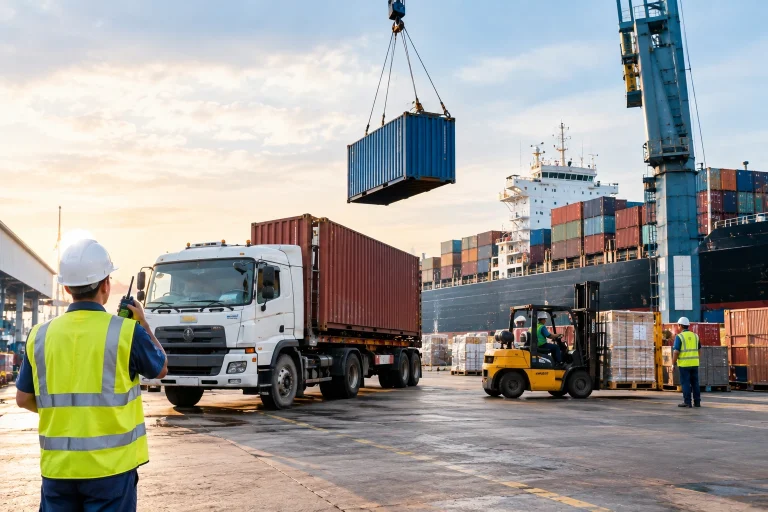
- Lifting and loading: Each piece is lifted by crane, positioned carefully in the hold or on deck, and lowered into place. Riggers and crane signalmen guide every movement.
- Securing and lashing: Once in position, cargo is lashed, chocked, and secured to the required standard. This prevents any shift during transit.
- Documentation and handover: A cargo tally is completed and all documents, including the bill of lading and weight certificates, are handed to the vessel master before departure.
Jobs that also require a skilled labour team on site are supported by Nam Seng Cargo’s manpower and labour supply services, with trained, WSH-compliant workers deployable from the start of the loading operation to the final handover.
Where Conventional Cargo Is Handled in Singapore
Singapore’s port network accommodates both containerized and conventional cargo across multiple terminals. The main locations for break bulk and conventional cargo operations include:
- Jurong Port: Singapore’s primary multi-purpose port and the main gateway for bulk and conventional cargo, handling steel, cement, project cargo, and copper slag with dedicated berths for non-containerized goods
- Pasir Panjang Terminal: primarily a container terminal but also capable of handling general cargo operations
- Keppel Terminal: handles general and conventional cargo alongside container operations
- Tuas Port: Singapore’s newest port facility, built to expand the country’s overall cargo capacity
Nam Seng Cargo’s stevedoring team operates across these terminals with full knowledge of local berth procedures, port authority requirements, and equipment configurations. The stevedoring and ground handling service covers both inbound and outbound cargo movements island-wide.
Nam Seng Cargo: Conventional Cargo Handling Singapore for Break Bulk and Oversized Loads
Nam Seng Cargo has operated in Singapore’s port and logistics sector since 1988. The company is ISO 9001:2015 certified and holds bizSAFE Star accreditation, recognised standards for quality management and workplace safety in Singapore’s maritime industry.
The stevedoring team handles break bulk, oversized loads, project cargo, heavy lifts, and Ro-Ro operations across Singapore’s major port terminals. Vehicles, trained riggers, qualified crane signalmen, and experienced cargo crews can all be arranged through a single booking. That removes the coordination overhead of managing multiple suppliers for a single job.
Written quotes are returned within one working day. Contact Nam Seng Cargo with cargo type, dimensions, weight, port terminal, and required dates to get started.
Frequently Asked Questions
What is conventional cargo handling Singapore?
Conventional cargo handling Singapore refers to the loading and discharging of non-containerized cargo at Singapore ports. It covers break bulk goods, oversized loads, project cargo, and heavy lift items, all handled as individual pieces using cranes, riggers, and specialist lifting equipment.
Which Singapore port handles the most conventional cargo?
Jurong Port is Singapore’s main hub for bulk and conventional cargo. It has dedicated berths, cranes, and handling infrastructure for break bulk, steel, cement, and project cargo. A large share of Singapore’s conventional cargo is handled through Jurong Port.
Do I need a specialist company for break bulk or oversized loads?
Yes. Oversized and break bulk cargo requires a lift plan, certified riggers, and WSH-compliant procedures. A general logistics company without port stevedoring experience cannot safely manage these operations. Nam Seng Cargo has handled this type of cargo at Singapore terminals for over 35 years.
Can conventional cargo handling be combined with inland transport?
Yes. After discharge at the port, cargo can be transported directly to a warehouse or site using Nam Seng Cargo’s lorry and truck fleet. Both the port operation and the inland delivery are handled by the same supplier, one booking, one invoice.
How do I get a quote for conventional cargo handling Singapore?
Contact Nam Seng Cargo with the cargo description, dimensions, weight, port terminal, and required loading or discharge dates. A written quote is returned within one working day.
Final Thoughts
Not all cargo fits in a box. Break bulk goods, oversized equipment, project loads, and heavy lifts all require a different approach, one built on experience, the right equipment, and a crew that knows exactly what it is doing at a live port berth.
Conventional cargo handling Singapore is a specialist service. It demands planning before the vessel arrives, precision during every lift, and correct documentation before the ship departs. When all of those elements are managed by an experienced provider, the job runs on time, and the cargo arrives safely.
Nam Seng Cargo has been delivering that standard since 1988, across Singapore’s major port terminals and for a wide range of industries. Reach out with your cargo details and get a written quote within one working day.